Overview
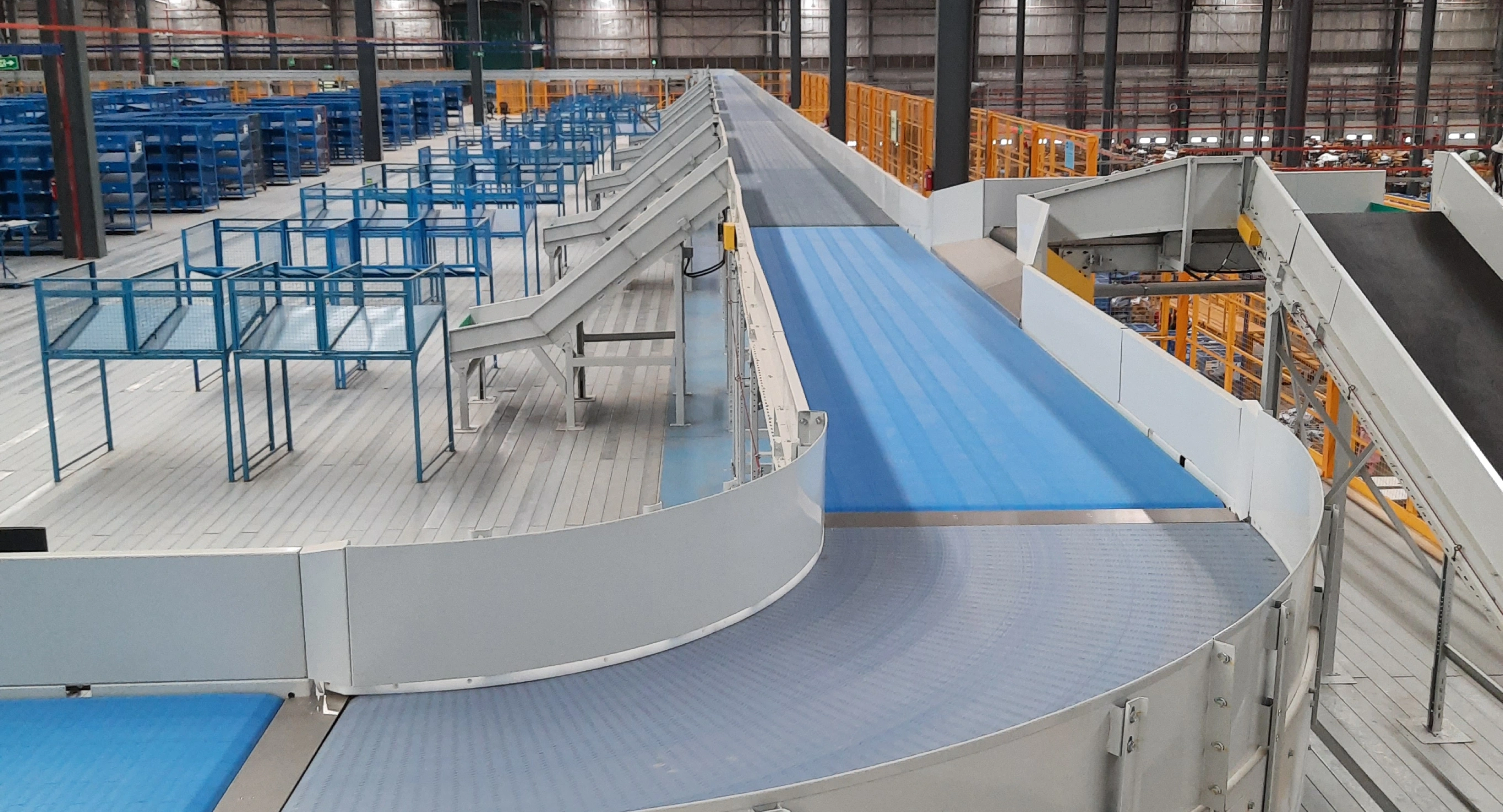
A VDS (Volumetric Dimensioning System) by MUVRO is an advanced automated solution designed to accurately measure the length, width, height, and volume of parcels, cartons, or totes within modern logistics and warehouse operations. Integrated seamlessly with conveyor and sorting systems, MUVRO’s VDS eliminates manual measurement by using sensors and intelligent controls to capture real-time dimensional data, improving accuracy and operational efficiency. The system is available in three specialized configurations—Integrated Roller Belt Conveyor VDS, Diverter Arm Conveyor VDS, and Smart Tilt Gate Conveyor VDS—each tailored for different handling and sorting requirements. With capabilities such as high-speed measurement, precise volume calculation, seamless WMS/ERP integration, and enhanced throughput, MUVRO’s VDS enables optimized space utilization, reduced errors, and cost-effective material handling in high-performance distribution environments.
A VDS (Volumetric Dimensioning System) is an automated system used to measure parcel dimensions (L×W×H) and volume in logistics operations. It is mainly of three types: Integrated Roller Belt VDS, Diverter Arm Conveyor VDS, and Smart Tilt Gate Conveyor VDS. Key capabilities include high-speed accurate measurement, real-time data capture, system integration (WMS/ERP), and improved throughput and space optimization.
Integrated Roller Belt Conveyor
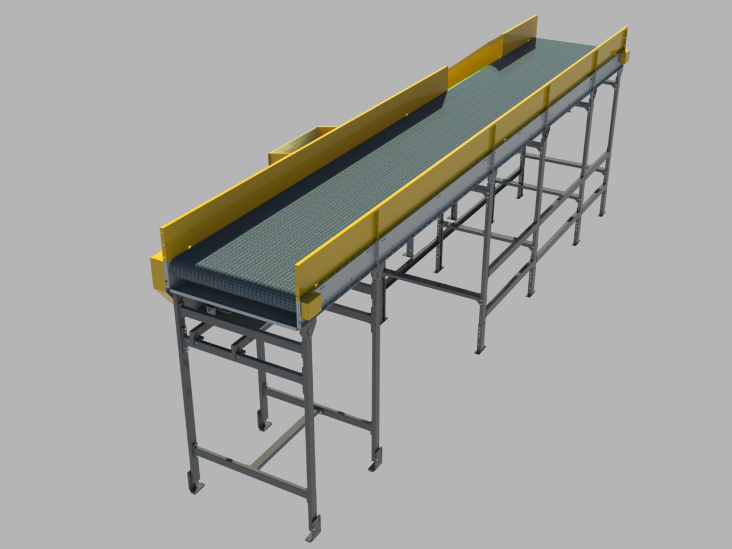
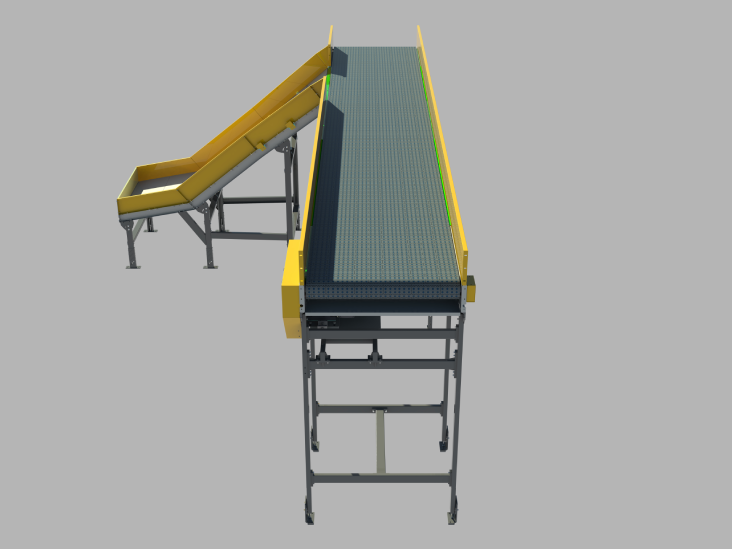
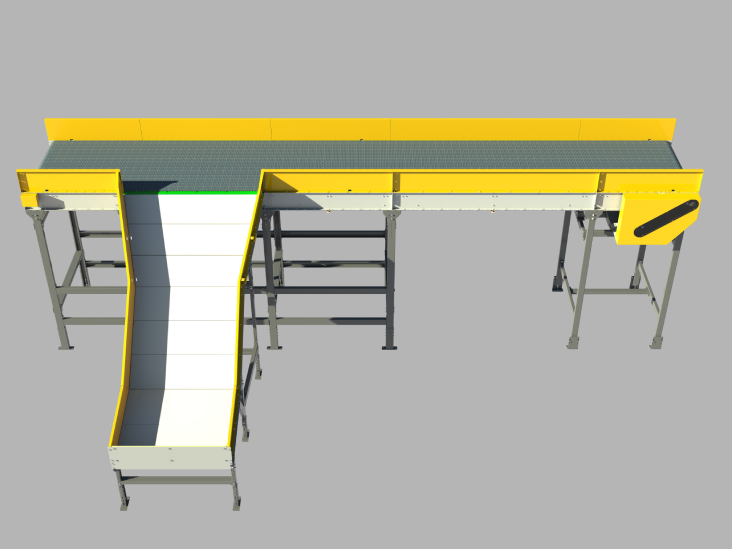
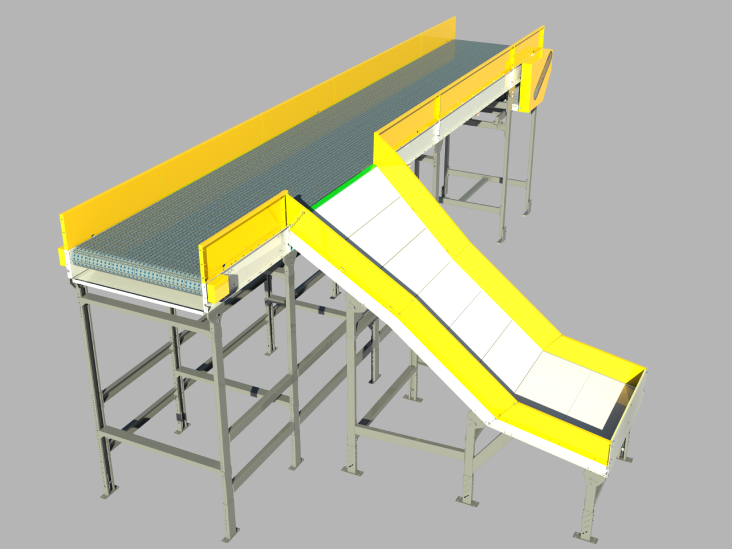
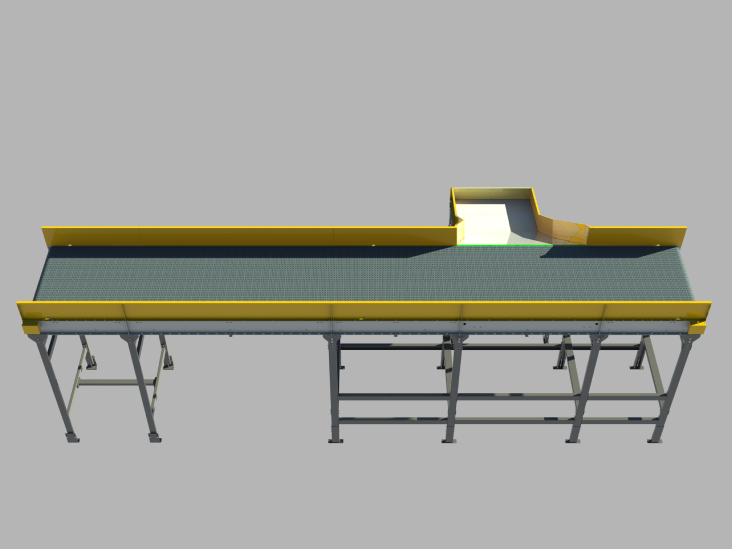
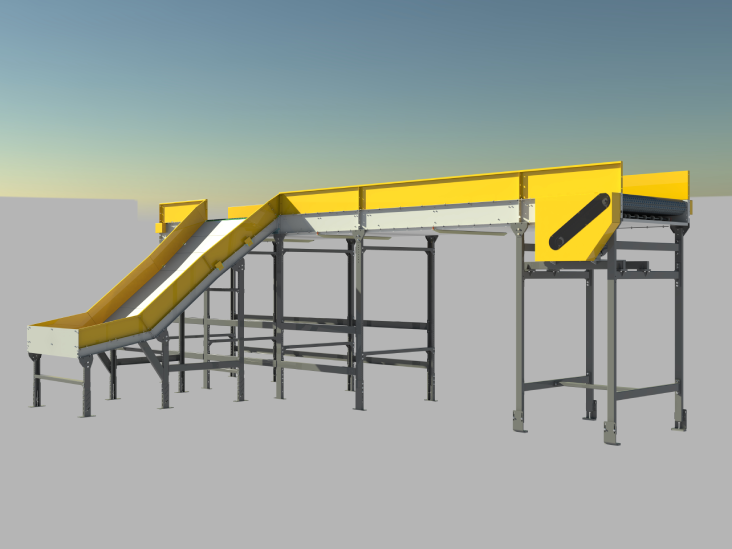
An Integrated Roller Belt Conveyor is an advanced conveying system designed for precise and efficient product handling, it features a modular plastic belt with embedded rollers that can move products in multiple directions — forward, sideways, or rotate them — without the need for external pus hers or complex mechanisms. By activating the rollers through contact with angled guides or belts beneath the surface, Integrated Roller Belt conveyors enable smooth sorting, merging, diverting, and aligning of items. They are widely used in packaging, logistics, food proces sing, and manufacturing industries due to their gentle product handling, low maintenance, and space - saving design. Offering high flexibility and automation efficiency, Integrated Roller Belt conveyors help increase throughput, reduce manual labour, and improve overall materi al flow in modern production and distribution systems.
Key Features
Omnidirectional movement
Allows products to move forward, sideways, or rotate in place for precise positioning.
Gentle product handling
Reduces product damage by eliminating pushers, gates, and other contact mechanisms.
Modular belt design
Simplifies maintenance and allows easy replacement of individual belt sections.
Flexible layout options
Supports complex conveyor configurations like 90° transfers, merges, and diverts.
Space-saving system
Performs multiple functions in a compact footprint, reducing floor space requirements.
Low maintenance
Fewer moving parts minimize wear, downtime, and maintenance costs.
High throughput capacity
Enables continuous, efficient flow of products in high-speed operations.
Handles varied product types
Works effectively with items of different sizes, shapes, and weights.
Key Components
Activated Roller Belt (ARB)
The core component — a modular plastic belt with angled rollers embedded in its surface, enabling controlled product movement in multiple directions.
Rollers
Small, freely rotating cylinders set at specific angles within the belt that guide and move products as they are activated.
Activation Mechanism
Typically consists of under-belt transfer belts or stationary guides that contact the rollers from beneath, causing them to rotate and move items in the desired direction.
Drive System
Includes motors, chains, or gear drives that power the main conveyor belt.
Frame and Support Structure
Provides the mechanical stability to hold the conveyor components and ensure smooth belt operation.
Control System
Coordinates belt activation, speed, and direction, often integrated with sensors or automation systems for sorting and merging tasks.
Smart Tilt Gate Conveyor
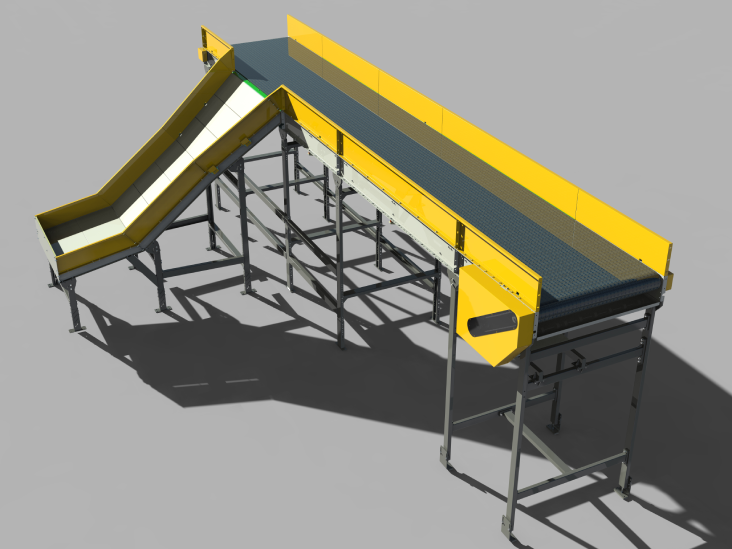
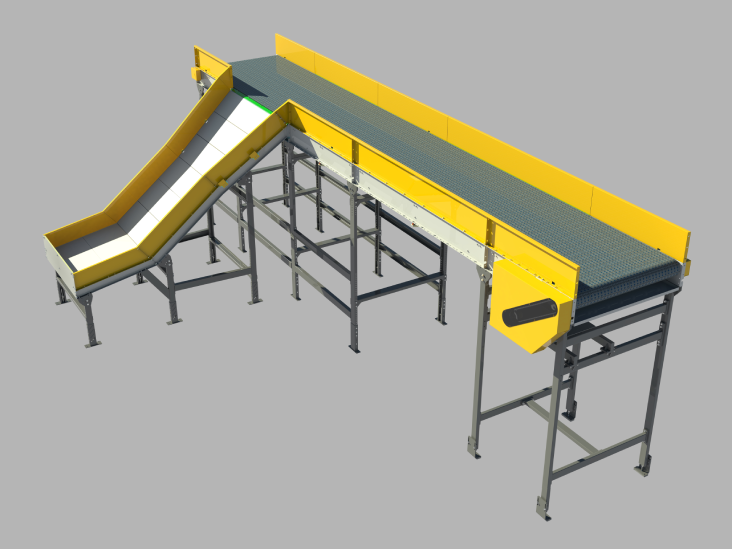
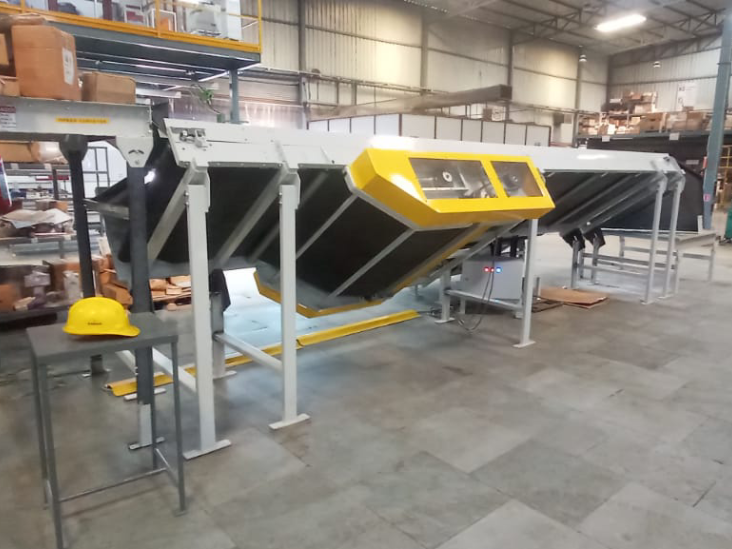
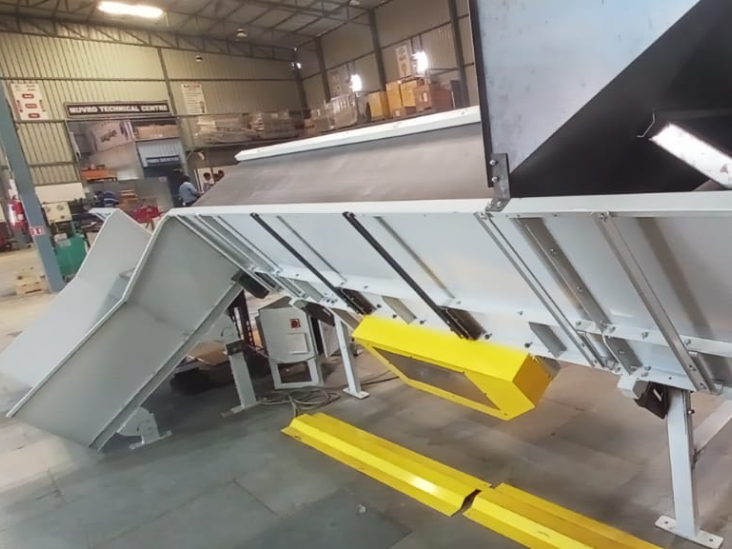
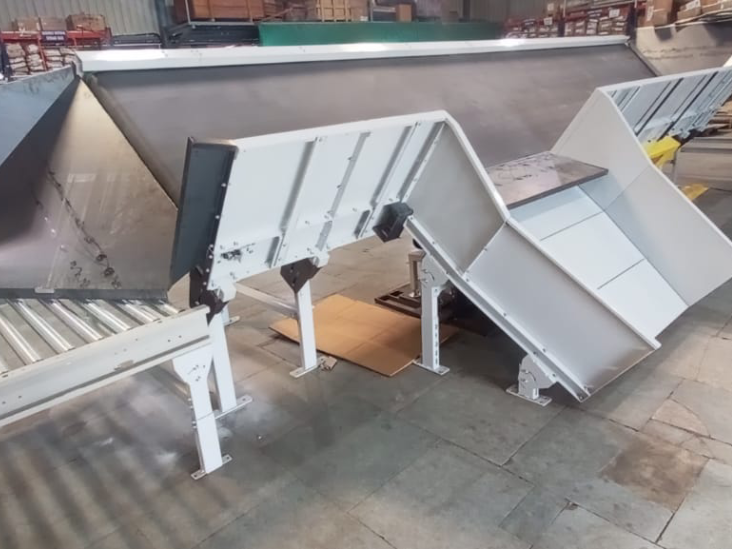
A Smart Tilt Gate Conveyor is a specialized conveyor system designed to transport materials, components, or finished products along an inclined or declined surface, incorporating a gating mechanism that controls the movement and flow of items on the conveyor. The tilt feature allows products to be moved efficiently between different elevation levels, facilitating loading, unloading, or transfer between workstations or storage areas.
The gating mechanism acts as a controlled barrier or stopper that can hold, release, or divert products at specific points along the conveyor. This precise control over the flow of items helps manage product accumulation, sorting, staging, or batch processing without manual intervention.
Widely used in manufacturing plants, warehouses, and distribution centers, gated tilted conveyors enhance operational efficiency by automating material handling processes, reducing product damage, and minimizing labour costs. Their flexibility in adjusting tilt angles and gate operation makes them suitable for various industries, including automotive, electronics, food and beverage, and logistics.
By integrating sensors and automation controls, gated tilted conveyors provide reliable and repeatable performance, ensuring smooth product flow and optimized throughput in complex production or packaging lines.
Key Features
Adjustable Tilt Angle
Allows the conveyor to operate on inclines or declines, facilitating movement between different heights or levels.
Integrated Gating Mechanism
Gates act as physical stops or release points to control product flow, enabling precise stopping, holding, or diverting.
Smooth and Controlled Material Handling
Designed to handle products gently to minimize damage during transport, especially on inclined surfaces.
Automation Ready
Easily integrated with sensors, PLCs, and other control systems for automated operation and synchronization with other processes.
Modular Design
Flexible and customizable to fit various layouts, product sizes, and throughput requirements.
Durable Construction
Built with materials suitable for the environment, ensuring long service life even under continuous operation.
Safety Features
Includes emergency stops, guards, and safety interlocks to protect operators and equipment.
Easy Maintenance and Access
Designed for quick cleaning, inspection, and maintenance to reduce downtime.
Variable Speed Control
Allows adjustment of conveyor speed to match production rates or product characteristics.
Compact Footprint
Optimized design to save floor space while providing efficient vertical transport.
Key Components
Conveyor Belt or Roller Bed
The surface on which products are transported; can be belts, rollers, or slats depending on the application.
Tilt Frame/Structure
The adjustable frame that supports the conveyor and allows it to operate at various incline or decline angles.
Gating Mechanism
Physical gates or stops that can be manually or automatically operated to control the flow of items on the conveyor.
Drive System
Motors and gearboxes that power the conveyor movement; often includes variable speed drives for flexibility.
Sensors and Detection Devices
Proximity sensors, photoelectric sensors, or limit switches to detect product position and control gate operation.
Control System (PLC/HMI)
Programmable logic controller and human-machine interface to automate conveyor and gate operations.
Support Legs and Mounting
Adjustable supports that stabilize the conveyor at the desired tilt angle.
Safety Features
Emergency stops, safety guards, and interlocks to ensure safe operation.
Load/Unload Stations
Areas designed for placing or removing products from the conveyor, often coordinated with gate operation.
Power Supply
Electrical supply system to power motors, sensors, and control equipment.
Diverter Arm Conveyor
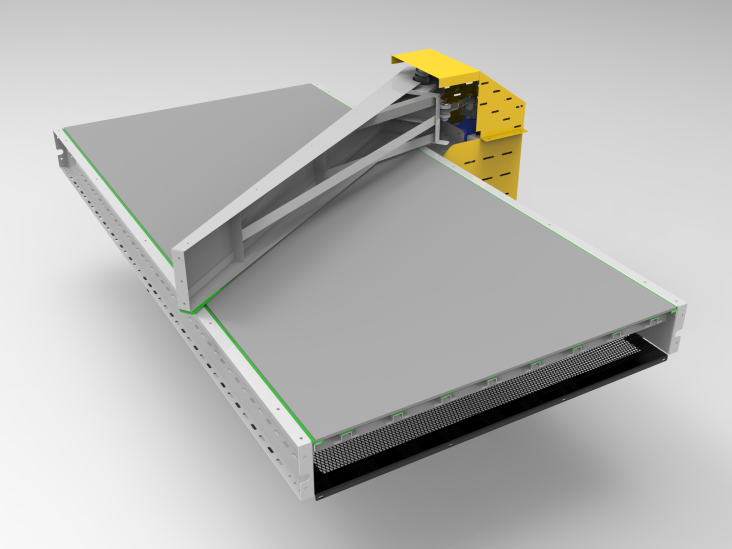
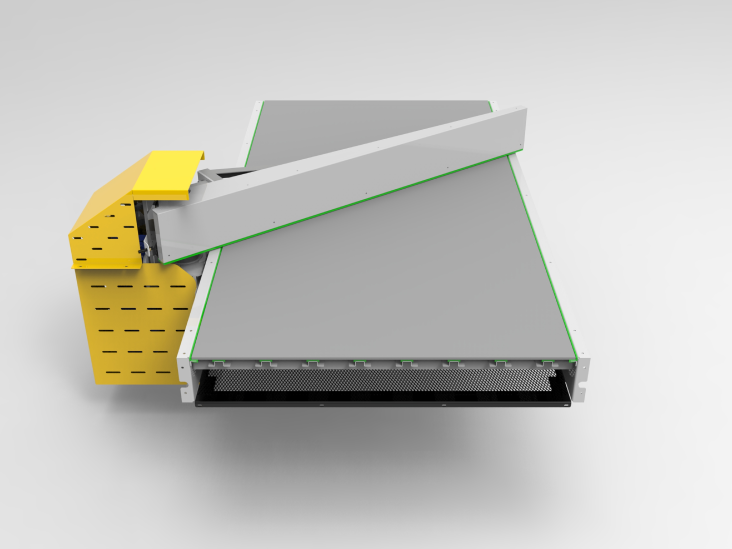
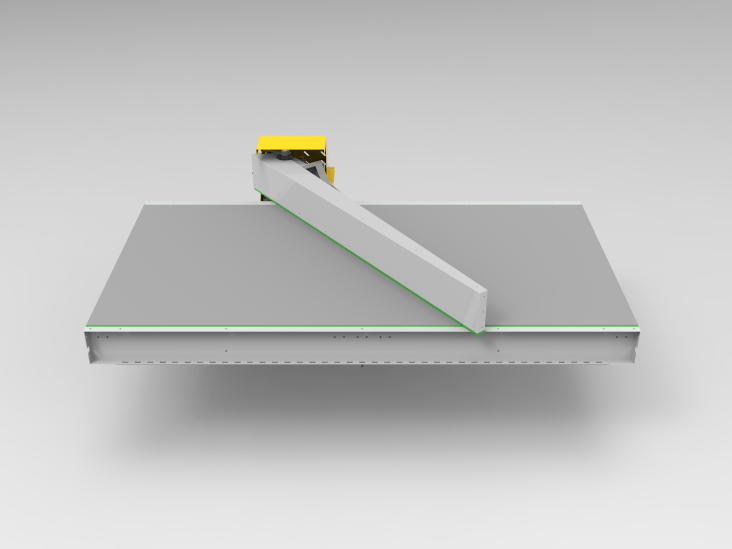
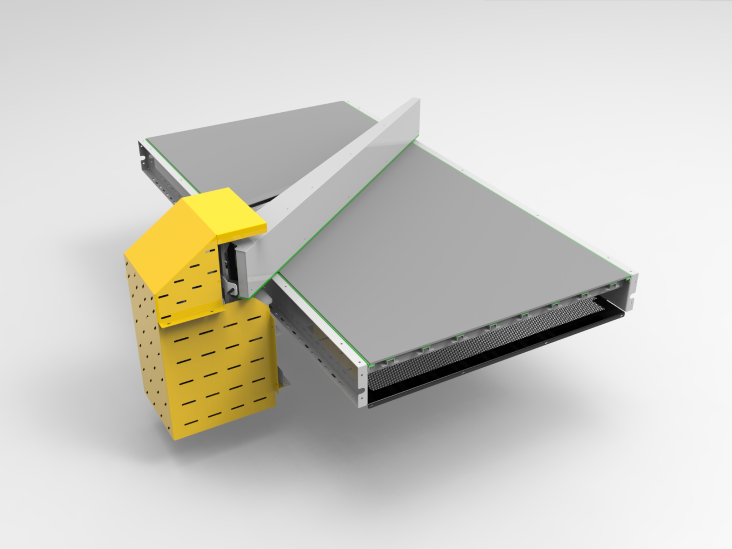
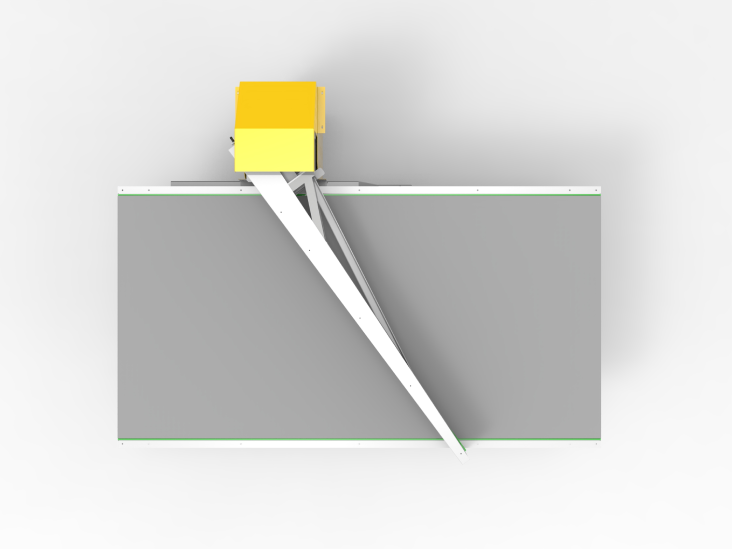
A Diverter Arm Conveyor is a compact and efficient sorting mechanism commonly used in automated parcel, logistics, and baggage handling systems. It is designed to divert parcels or bags from the main conveyor line to designated secondary lines, chutes, or sorting areas. The system operates using a swinging arm that is actuated by a pneumatic cylinder, servo motor, or electric actuator, depending on the required speed and precision.
When a parcel is identified for diversion, the arm swiftly swings into the conveyor path, redirecting the item without stopping the main flow. This ensures continuous material handling, high throughput, and reduced manual intervention.
Due to its compact design, fast actuation, and reliable operation, the swing arm diverter is widely implemented in e-commerce distribution centres, courier hubs, and airport baggage systems to achieve efficient and accurate sortation.
Key Features
High-Speed Operation
Capable of diverting parcels or bags at conveyor speeds up to 2.5 m/s with precise timing.
Compact Design
Space-saving structure suitable for integration in existing conveyor layouts.
Flexible Actuation Options
Available with pneumatic, servo, or electric rotary actuators depending on speed and accuracy needs.
Accurate Sorting
Ensures smooth and controlled parcel redirection with minimal impact or product damage.
Quick Response Time
Fast actuation (typically 100–300 ms) enables high throughput.
Durable Construction
Made from mild steel, aluminium, or stainless steel for long life and low maintenance.
Easy Integration
Compatible with barcode scanners, sensors, and PLC-based control systems.
Low Maintenance
Simple mechanism with easy access for inspection and servicing.
Customizable Design
Tailored arm length, angle, and mounting configuration to suit various conveyor systems.
Key Components
Swing Arm / Paddle
The deflecting blade that swings into the conveyor path to redirect parcels or bags.
Actuator
Provides the swinging motion; can be pneumatic, servo-driven, or electric rotary type.
Mounting Frame / Bracket
Supports the entire diverter assembly and allows secure installation on the conveyor line.
Sensors
Detect parcel position or barcode data and signal the control system for accurate timing.
Control System (PLC / Controller)
Coordinates actuator movement and integrates with conveyor and sortation logic.
Shock Absorber / Stopper
Restricts excessive movement and cushions the arm during operation or return stroke.
Power Supply Unit
Delivers electrical or pneumatic power to the actuator and control components.
Safety Guards / Covers
Enclose moving parts to protect operators and ensure safe operation.